Florida Tile to move headquarters to Lexington
By Emily Ulber - eulber@herald-leader.com
State officials announced on Thursday the relocation of a Florida company to Lexington.
Florida Tile Inc. will move its headquarters from Lakeland, Fla., to Lexington, which will bring the company's corporate offices closer to its manufacturing plant and national distribution center in Lawrenceburg.
The move, which should occur in the next year, will result in the initial creation of 25 new jobs, growing to 51 over the term of the agreement. The project represents a capital investment of $3,732,500 for the state.
Kevin Verhoven, a broker for The Gibson Co., is representing the developers handling Florida Tile's move to Lexington. It will be housed in a 10,000-square-foot property in Beaumont Circle, he said.
The move might prompt other companies the size of Florida Tile to look at Lexington in a more favorable light, Verhoven said
The project is one of the first to be approved by the Kentucky Economic Development Finance Authority under the Kentucky Business Investment Program.
KEDFA preliminarily approved Florida Tile for up to $1,275,000 in tax incentives, which can be earned over a 10-year period through corporate income tax credit and wage assessments. The maximum annual approval amount to be earned is $127,500.
Friday, July 31, 2009


Tuesday, July 28, 2009
Housing Market Is Bouncing Back???
Housing market is bouncing back
By Alan Zibel and Alex Veiga - Associated Press
WASHINGTON — New-home sales rose last month at the fastest clip in more than eight years as buyers eagerly took advantage of bargain prices — a clear sign, economists said, that the real estate market might finally be bouncing back.
Historically low interest rates and a federal tax credit for first-time homeowners also helped push home sales to their highest level since November, the Commerce Department reported Monday.
Home prices are still falling around the country, but sales have risen for three months in a row. New-home construction is at the busiest level since last fall. And home resales rose in June for the third straight month.
if(miyahoo.ads[mi_live_or_preview].dart.enabled){ // 'live' or 'preview' is set during page build
_krdDartInc++;
document.write('');
}
"The worst of the housing recession is now behind us," said David Resler, chief economist at Nomura Securities. And as with the overall economy, the "recovery" is likely to be slow and arduous, he said.
Put in perspective, the improvement in sales is modest. The pace of sales for new homes in June was 72 percent below the peak of four summers ago, and there is an enormous inventory of homes lingering on the market.
"There's been signs of improvement, but we're a long ways off from being back to a normal market," said Corey Barton, president of CBH Homes in Meridian, Idaho. Sales were up there in June, Barton said, but "it wasn't our biggest jump in eight years."
But there were clear signs the housing market is showing more life than at any point since the recession began. Keystone Custom Homes of Lancaster, Pa., founded in 1992, had its best June ever. July is looking good, and president Larry Wisdom expects an even stronger August.
"We doubled our sales in May, and then in June it took off," he said.
New-home sales for June came in at a seasonally adjusted annual rate of 384,000, blowing past the expectations of economists surveyed by Thomson Reuters, who expected 360,000.
The figure is up 11 percent from May, and May's number of 346,000 was higher than previously thought. The increase is the largest since December 2000, when investors scared by the tech-stock bubble were looking for more stable places to put their money.
Sales were strongest in the Midwest, where they jumped 43 percent from May's total. Sales climbed 29 percent in the Northeast and 23 percent in the West. They declined slightly in the South.
The median sales price was $206,200, down from $234,300 a year ago and $219,000 from May. Economists expect home prices to continue falling until the competition from low-priced foreclosures ebbs sometime next year.
To drum up sales, CBH Homes has had to slash prices by as much as 10 percent from last year's levels. The new homes CBH builds have to compete with the glut of foreclosures, which have drawn many first-time home buyers.
In addition to lower prices, buyers are rushing to take advantage of a federal tax credit that covers 10 percent of the home price or up to $8,000 for first-time buyers. Home sales must be completed by the end of November for buyers to take advantage.
"There's definitely more first-time home buyers in the market than what we've seen in the last several years," Barton said.
Fallout from the housing crisis played a central role in the U.S. recession, now the longest since World War II. Mortgages went bad, home builders pulled back and fired thousands of workers, foreclosures spiked, and lenders were shuttered by the dozen.
Although the real estate market appears to be starting a recovery, that doesn't mean it will instantly become a powerful economic engine. Construction is weak because builders have too many unsold homes sitting vacant.
At the current sales pace, there are enough new homes for sale to last nearly nine months. That's slightly less time than in May but much longer than the six-month mark that indicates a balanced market.
Falling prices mean homebuilding companies won't be making much money anytime soon, but their stocks soared nonetheless on the impressive June sales. Beazer Homes USA gained 13 percent, and shares of Centex and Hovnanian Enterprises rose 9 percent.
Monday, July 27, 2009
June new home sales rise 11 percent
By ALAN ZIBEL, AP Real Estate Writer Alan Zibel, Ap Real Estate Writer – 1 hr 21 mins ago
WASHINGTON –
New U.S. home sales rose by the largest amount in more than eight years last month, in another sign the housing market is finally bouncing back from the worst downturn in decades.
The Commerce Department said Monday that sales rose 11 percent in June to a seasonally adjusted annual rate of 384,000, from an upwardly revised May rate of 346,000.
It was the strongest sales pace since November 2008 and exceeded the forecasts of economists surveyed by Thomson Reuters, who expected a pace of 360,000 units. The last time sales rose so dramatically was in December 2000.
Sales have risen for three straight months. The median sales price of $206,200, however, was down 12 percent from $234,300 a year earlier and down nearly 6 percent from $219,000 in May.
The report is another encouraging sign that the beleaguered housing sector is finally coming back to life. Last Thursday, the National Association of Realtors reported that home resales posted a monthly increase of 3.6 percent in June.
There were 281,000 new homes for sale at the end of June, down more than 4 percent from May. At the current sales pace, that represents 8.8 months of supply — the lowest level since October 2007.
Fallout from the housing crisis has played a central role in the U.S. recession, now the longest since World War II. Foreclosures have spiked, homebuilders have slashed construction, and financial companies have lost billions.
Tuesday, July 21, 2009
For more people, scales tip toward buying a home
By ALEX VEIGA, AP Real Estate Writer Alex Veiga, Ap Real Estate Writer – Tue Jul 21, 5:52 pm ET
For Aaron Carter, a musician who was struggling to fit a drum set, a piano and three guitars into his 600-square-foot apartment in Phoenix, the math on owning a home finally began to work in his favor.
Rent for the apartment he shared with his wife: $615. Mortgage payment for a home with twice the space: $760. And the interest on a mortgage is tax-deductible. So they jumped at the chance to buy some elbow room.
"We figured that everything together, getting more space, getting out of the apartment life and also just the prices right now, it just was the perfect time for us as a couple" to buy, said Carter, 20.
For Americans debating whether to buy or rent their homes, the scales are tipping toward ownership. Because of the slide in home prices, low interest rates and tax incentives, renters are realizing they could handle a mortgage for a just little more money.
An Associated Press analysis of 45 metro areas finds the gap between the monthly mortgage payment on a median-priced home and the median rent has shrunk from $777 a month to just $221 in the past three years.
It could mean a quicker end to the housing-market doldrums, as renters buy up unsold homes languishing on the market.
In some metro areas, including Cleveland, Atlanta, Indianapolis and St. Louis, the gap was less than $100 a month. And home prices are expected to fall faster than rents this year, which means the gap should get even smaller.
In once-inflated markets like Phoenix, Las Vegas and inland swaths of California and Florida, where prices have tumbled more than 40 percent, sales are rising because first-time homebuyers are snapping up bargain-priced homes.
They are getting help from a federal tax credit that covers 10 percent of the home price or up to $8,000 for first-time buyers who earn up to $75,000 a year, or $150,000 for a couple. The credit expires at the end of November.
Cheap foreclosures in some of those markets are now drawing multiple bids. As supply and demand even out, home prices will eventually begin to rise. But for now buyers are having little trouble finding bargains.
Jere Ross, an Air Force vehicle operator, and his wife recently bought a four-bedroom, 1 1/2-bath house in Zephyrhills, Fla., a Tampa suburb, for $86,500 rather than jump into another yearlong apartment lease.
Ross, 23, used a Veterans Administration loan, which doesn't require a down payment, and got a 30-year mortgage at a fixed rate of 5.5 percent. His monthly payment comes to $700 a month, including property taxes and insurance — $110 less than he paid to rent an apartment nearly half the size.
"It just came to a point where we were just throwing our money away on rent," Ross said. "When it came to find out that we could own this house for, less than what we're paying in rent, it was a 'no duh!' kind of moment."
The study, conducted for the AP by Marcus & Millichap Real Estate Investment Services, used prices for the first three months of this year.
It calculated mortgage payments by assuming a 10 percent down payment, a 30-year fixed loan at 5.15 percent, and taxes and insurance that added up to 1.5 percent of the purchase price. It assumed borrowers used private mortgage insurance.
While the analysis found the gap between what it costs to own and rent is shrinking, it's still too wide for millions who live paycheck to paycheck.
Renters with jobs in the education, retail and transportation industries don't earn enough to rent the average two-bedroom apartment in many of these major cities, let alone buy, according to a recent study of 200 metro areas by the Center for Housing Policy.
Renters who want to become homeowners also face the obstacles of scraping together a down payment and qualifying for the loan. And renters with a record of paying bills late will have a hard time getting a low interest rate.
"There's still those buyers that are having trouble getting financed," says Brad Snyder, an agent with ZipRealty in Las Vegas. "A lot of them are still just looking for that easy way in, and it's just not there."
Homeowners also have to shoulder many costs renters don't face — association fees, insurance, some utilities. And there are still cities, among them San Francisco and Los Angeles, where it's usually still more affordable to rent — even though home prices have fallen more than 30 percent.
Mike Sigal, a longtime renter in San Francisco, has looked at buying a home for the past couple of years. But buying one comparable to the two-bedroom, two-bath apartment he has now would cost more than $600,000, meaning the mortgage would far exceed his $1,800 rent.
"The math doesn't come out," said Sigal, 42, who runs an information services company. "I've got extreme value for my rent."
Nevertheless, homes in some parts of country are more affordable than they've been in decades. Even Dean Baker, an economist who sounded early warnings about the housing bubble and sold his own condo in 2004, has come around.
Baker, co-director of the Center for Economic and Policy Research in Washington, bought a five-bedroom house last month for $650,000, which he figures is about 20 percent below what it would have gone for at the peak of the market.
"We feel we got a pretty good deal," Baker said.
By buying, he accepted the risk that he might lose money if home values keep dropping. "We'll probably end up more or less even," he said. "Depending how much further down they go."
Tuesday, June 30, 2009
Breaking News!
For the first time I have noticed in a long time, and yes its the last day of the month, and quarter, but pendings and solds, and even solds along have surpassed new listings. At least as of 4:21 pm. Note there are even 5 price increases...watch out!
LBAR 24-Hour Market Watch
New Listings 70
Back on Market 11
Price Increases 5
Price Reductions 53
Pendings 38
Solds 80
Expireds 19
Inactives 18
LBAR 24-Hour Market Watch
New Listings 70
Back on Market 11
Price Increases 5
Price Reductions 53
Pendings 38
Solds 80
Expireds 19
Inactives 18
Asbestos and Insulation Tips
Kentucky Home Safety Tips & Asbestos Prevention
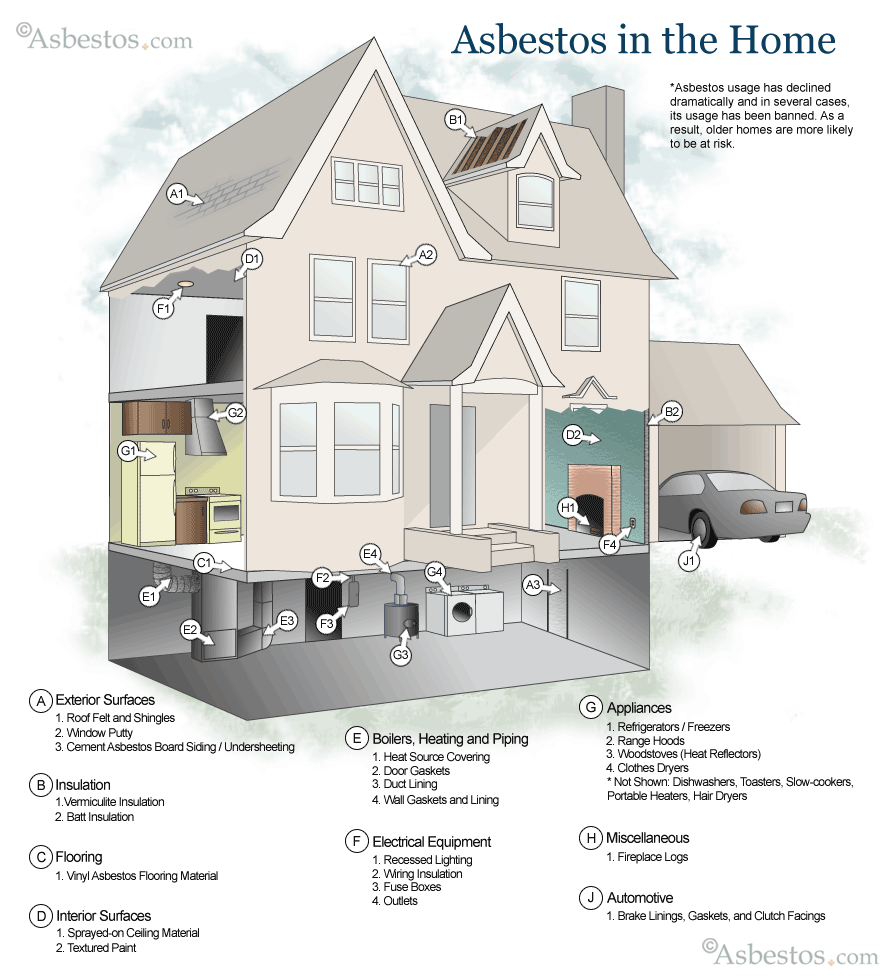
Purchasing or moving into a new home is the investment of a
lifetime. It will insure you and your family will have a safe and
healthy home for a long foreseeable future. However, it is also time
where additional responsibilities will be brought into your life.
Having the assistance of a reliable and honest Kentucky real estate
agent will make all the difference in the world.
Asbestos Tips
Used throughout the 20th century to insulate pipes, boilers and in
roofing, asbestos gained recognition due to its resistance to heat and
electrical conductivity. Homes built before 1980 may still contain
asbestos. Its main uses were found as insulation, piping, brake lining,
flooring and roofing. Asbestos exposure incidents in Kentucky have
mainly occurred as a result of industrial sites.
If asbestos is located, it must be left un-touched until a
professional can provide a course of action. In many situations, the
best action is no action. Asbestos that is disturbed or damaged due to
age is known as "friable" asbestos. This is a concern because its toxic
fibers can easily circulate and become inhaled.
Frequent and long term exposure to asbestos has been known to cause asbestosis and sarcomatoid mesothelioma,
two forms of asbestos lung cancer. Asbestos-related illnesses may not
appear until 20 to 50 years after exposure and may have symptoms which
are commonly found with less serious illnesses. This makes mesothelioma diagnosis even more difficult for physicians.
Sometimes, the best action is no action. If asbestos removal is
necessary, it should be performed by licensed abatement contractors who
are trained in handling toxic materials. The Kentucky Division for Air Quality strives to protect the environment and civilian health by monitoring and assisting in the disposal and removal of asbestos.
Green = Healthier and Cost Efficient Homes
Recently, congress passed the American Recovery and Reinvestment
Act. Included in this act were extensions to the tax incentives placed
for energy efficiency in 2005, as well as new credits for homeowners
who remodel or build using eco-sustainable methods. This promotes
incentives for home or business owners who implement green building
methods into their property.
Many locations throughout the United States are swiftly changing
their construction practices to suit the environment and the health of
human beings. Promoting new ways of building construction and
insulation, there are new regulations being put on older methods which
are now known to be harmful.
Most people are unaware to the fact that eco-friendly products can
cut energy costs by 25 % per year. These include the use of cotton
fiber, lcynene foam and cellulose. These alternatives have the same
flame resistant, durable qualities of asbestos, except they are
eco-friendly and safe.
Conducting a study in 2003, the United States Green Building Council
also reported a savings of $50 to $65 for green constructed buildings.
Rather than expensive and mal-treated wood, interior walls can be made
from steel and concrete, avoiding many of the problems associated with
asbestos and other insulation methods.
Jesse Herman
Mesothelioma Cancer Center
jesse@asbestos.com
Local vs. National News
OK once again I am going to say it, All Real Estate is Local, meaning I don't really care what Las Vegas is doing, and I REALLY do not care about California. So why is it that that is all we hear about? Florida is a little closer to home, and we New York is understandable, but still not relavant to Lexington, or Kentucky for that matter. However we hav to realize this is what our clients see everyday. Like the article on Yahoo today...
Home prices post 18.1 percent annual drop in April
Widely watched index shows home prices down by 18.1 pct. in April, but trend is stabilizing
Case-Schiller? Again that is only 20 cities, and none of them are in Kentucky. Plus it says that 8 of the 20 posted gains. WHO CARES ABOUT VEGAS!? But htis seems to contradict what NAR says...
Take a look at the recent local KAR and LBAR numbers to see what is happening in Kentucky and Lexington. Which one of these makes more sense to you and your clients who may be selling or buying a home? So share it...
Subscribe to:
Posts (Atom)


 Posts

